



Measure the foot, then read the chart.
Shoe size labels are not standardised between countries or brands. Foot length in centimetres is the only number that means the same thing everywhere — so start there, and use the conversions below as the translation.
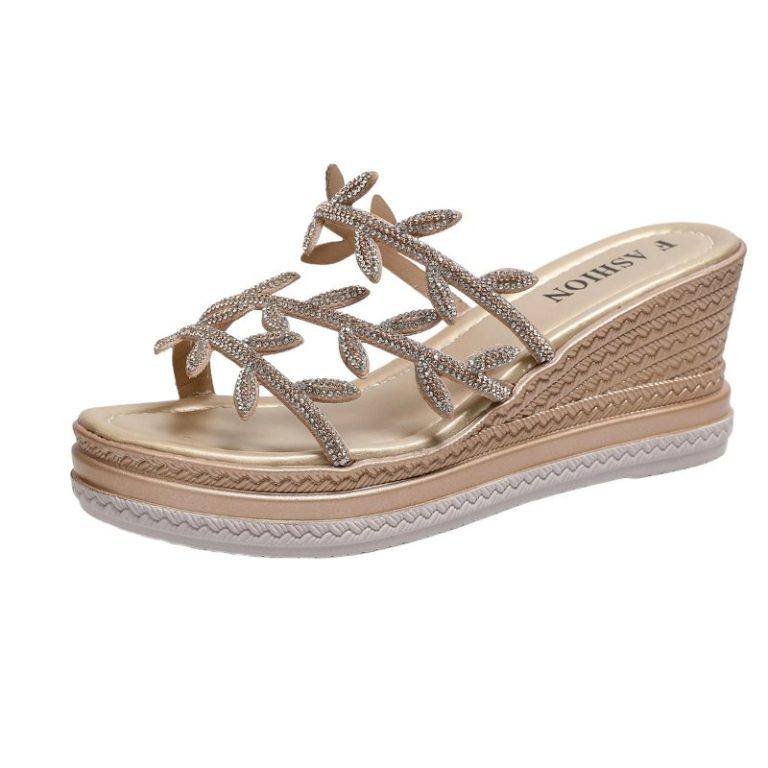
How to measure your foot correctly
Two minutes with a sheet of paper is more reliable than remembering what size you took in the last pair you bought.
- Measure in the late afternoon or evening. Feet swell during the day, and a shoe fitted to a morning foot will feel tight by dinner.
- Place a sheet of paper flat against a wall and stand on it with your heel touching the wall. Put your weight on the foot — a loaded foot is longer than a resting one.
- Mark the paper at the tip of your longest toe, which is not always the big toe.
- Measure from the wall edge to the mark in centimetres.
- Repeat for the other foot. Most people have one foot up to half a size larger — always fit to the larger one.
- Wear the socks or hosiery you would normally wear with the shoe, or none at all for sandals.
- If your measurement falls between two sizes, take the larger one. A slightly roomy sandal is wearable; a tight one is not.
- For high or wide insteps, also measure the girth around the widest part of the foot and tell us the number.
Do not size a production run from a single person’s feet. Ask us for a sample in the middle of your intended run — usually EU 37 or 38 — and check it against the chart before you confirm the ratio for the whole order.
Women’s size conversion chart
Our standard grading. Find your foot length in the first column and read across.
| Foot length | EU | UK | US | JP / CN (cm) |
|---|---|---|---|---|
| 21.0 – 21.5 cm | 34 | 1.5 | 4 | 21.5 |
| 21.6 – 22.2 cm | 35 | 2.5 | 5 | 22.0 |
| 22.3 – 22.8 cm | 36 | 3.5 | 6 | 22.5 |
| 22.9 – 23.5 cm | 37 | 4 | 6.5 | 23.0 |
| 23.6 – 24.1 cm | 38 | 5 | 7.5 | 24.0 |
| 24.2 – 24.8 cm | 39 | 6 | 8.5 | 24.5 |
| 24.9 – 25.4 cm | 40 | 6.5 | 9 | 25.0 |
| 25.5 – 26.1 cm | 41 | 7.5 | 10 | 26.0 |
| 26.2 – 26.7 cm | 42 | 8.5 | 11 | 26.5 |
| 26.8 – 27.4 cm | 43 | 9.5 | 12 | 27.0 |
UK and US conversions differ between brands and there is no single official standard. If you normally take a specific UK or US size, treat the foot-length column as authoritative and the rest as a guide. Half sizes and sizes outside EU 34–43 can be produced to order for wholesale runs.
Fit varies by style — read this before choosing
The same foot does not take the same size in every construction. These are the adjustments we would suggest for our own categories.
| Style | Fit character | Our recommendation |
|---|---|---|
| Buckled & strappy sandals | Adjustable across the instep | Take your measured size |
| Wedge sandals | Runs slightly short as the footbed curves | Size up if between sizes |
| Thong & toe-post sandals | Toe post shortens usable footbed | Size up if between sizes |
| Slippers & mules | Open back, no heel retention | Measured size, or down if between |
| Flat shoes, closed toe | True to size, no adjustment | Take your measured size |
| Rhinestone & embellished uppers | Less give than plain leather | Size up for a wide or high instep |
Our standard is a medium width
Roughly a D fitting on the US scale. If your market is predominantly wide-footed, tell us at the sampling stage — the last can be adjusted before production rather than after.
Leather relaxes, PU does not
Genuine leather uppers stretch and mould to the foot over the first few wears. PU and textile hold their shape, so fit them correctly from the start.
±0.5 cm on handmade pairs
A tolerance of half a centimetre against the approved sample is normal in handmade footwear. Anything beyond that is a defect and is covered by our returns policy.
Choosing your size ratio
Getting the ratio wrong is the most common way a good order turns into dead stock. You sell out of 37 and 38 in three weeks and still have every 34 and 43 in the stockroom at the end of the season.
| Market | Typical size run | Suggested ratio per 30 pairs |
|---|---|---|
| Europe | EU 36 – 41 | 2 / 5 / 7 / 7 / 6 / 3 |
| United Kingdom | EU 36 – 41 | 3 / 5 / 7 / 7 / 5 / 3 |
| North America | EU 36 – 42 | 2 / 4 / 6 / 7 / 6 / 3 / 2 |
| Asia | EU 34 – 39 | 3 / 5 / 7 / 7 / 5 / 3 |
| Middle East | EU 36 – 41 | 3 / 5 / 6 / 7 / 6 / 3 |
These are starting points, not requirements. Within your 30-pair minimum you can split the sizes however your sales data says you should — including ordering a single size run if you know exactly what sells. Send us the breakdown and we pack the cartons to match.
Send us your foot measurement, or your size run, and we will confirm it.
For retail buyers we will tell you which size to order. For wholesale buyers we will sanity-check your ratio against what other buyers in your market actually reorder.
