



Checked against a sealed pair, not against a drawing.
Quality problems in footwear rarely show up in the factory. They show up three months later, in your customer’s hands. Everything below is designed to catch them before the carton is taped.
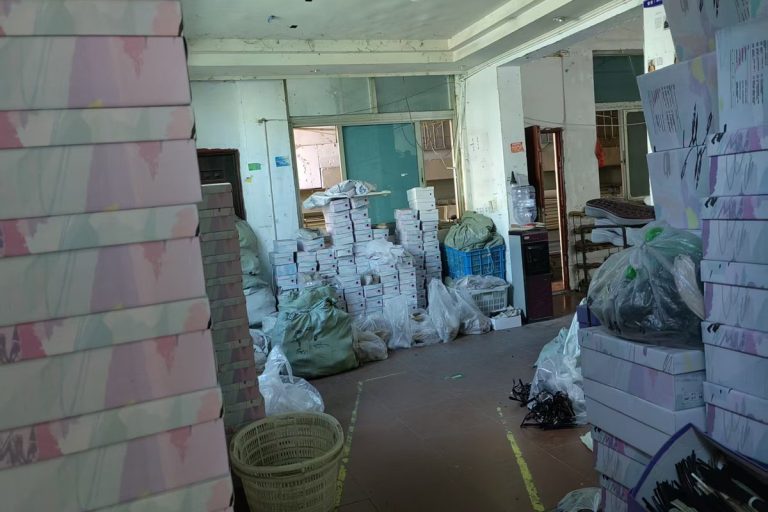
Everything starts with the sealed sample
Once you approve a sample, we seal a reference pair and keep it in the workshop for the life of the style.
Drawings drift, pairs do not
A specification sheet leaves room for interpretation. A physical pair on the bench does not. When a line worker is unsure how tight a strap should sit, they hold the sealed pair next to the one in their hand.
Kept for repeat orders
The sealed pair stays with us. When you reorder next season, we do not rebuild from the tech pack — we match the pair you approved, so season two looks like season one.
A counter-sample for you
We can seal and send you a second identical pair so you hold the same reference we do. Useful if you need to arbitrate a claim later.
Where we stop and look
Catching a fault at the cutting table costs a piece of leather. Catching the same fault after lasting costs the whole pair.
Incoming material check
Leather, PU, linings, outsoles, buckles and rhinestones are checked on arrival against the approved swatch — colour, thickness, hand feel, hardware finish. Off-shade material is rejected here, because once it is cut it cannot go back.
In-line check during stitching
Uppers are pulled off the line at intervals and measured against the pattern. Stitch density, seam alignment, edge folding and trim placement are checked while there is still time to correct the run rather than scrap it.
After lasting and soling
The bond between upper and sole is the single most common failure point in cemented footwear. Pairs are pulled and flexed at this stage, and heel attachment is stress-checked before finishing.
Final pair inspection before packing
Every pair, not a sample. Checked against the sealed reference, matched left to right, cleaned of adhesive and loose threads, then boxed.
What the final inspection actually covers
The same twelve points, on every pair, on every order.
- Stitching — even density, no skipped stitches, thread ends locked off and not simply trimmed
- Sole bond — no gap at the toe or waist, no lifting at the edge when flexed
- Heel and wedge — attachment stress-checked, no movement under hand pressure
- Colour consistency — panels within a pair and pairs within a batch compared side by side
- Hardware and trim — buckles secure, rhinestones seated with no loose stones or visible adhesive
- Insole and lining — flat, fully bonded, no wrinkles or exposed edges
- Size and last consistency — measured against the graded specification, not eyeballed
- Left and right pairing — correct size on both feet and symmetry between them
- Surface finish — no adhesive residue, scuffs, knife marks or dirty edges
- Odour and cleanliness — pairs aired and free of strong solvent smell before boxing
- Labelling — size, style code, country of origin and your own labels correct and legible
- Packing — correct pairs per carton, carton markings, and cartons sealed and weighed
Before any shipment leaves, request inspection photographs: several pairs from different points in the run, the sole bond at the toe, the carton markings, and the packing list. It takes us an hour and it removes almost every surprise on arrival.
What counts as a defect, and what does not
Handmade footwear made from natural materials will never be perfectly uniform. Being clear about this in advance prevents most disputes.
| Aspect | Normal variation | Reportable defect |
|---|---|---|
| Measurements | Up to ±0.5 cm against the approved sample | Beyond ±0.5 cm, or inconsistent within a size |
| Colour | Slight shade movement between material batches | Visibly different shade against the sealed sample |
| Leather surface | Natural grain, growth marks and pore variation | Cuts, holes, or marks on a primary visible panel |
| Stitching | Minor variation in stitch length on curves | Skipped stitches, broken thread, seam opening |
| Sole bond | Faint cement line visible at the edge | Any gap, lifting or separation |
| Hardware | Slight tone difference between plating batches | Loose, missing, sharp or corroded hardware |
If anything in the right-hand column arrives in your shipment, our Returns & Refunds policy sets out how it is resolved and who covers the cost.
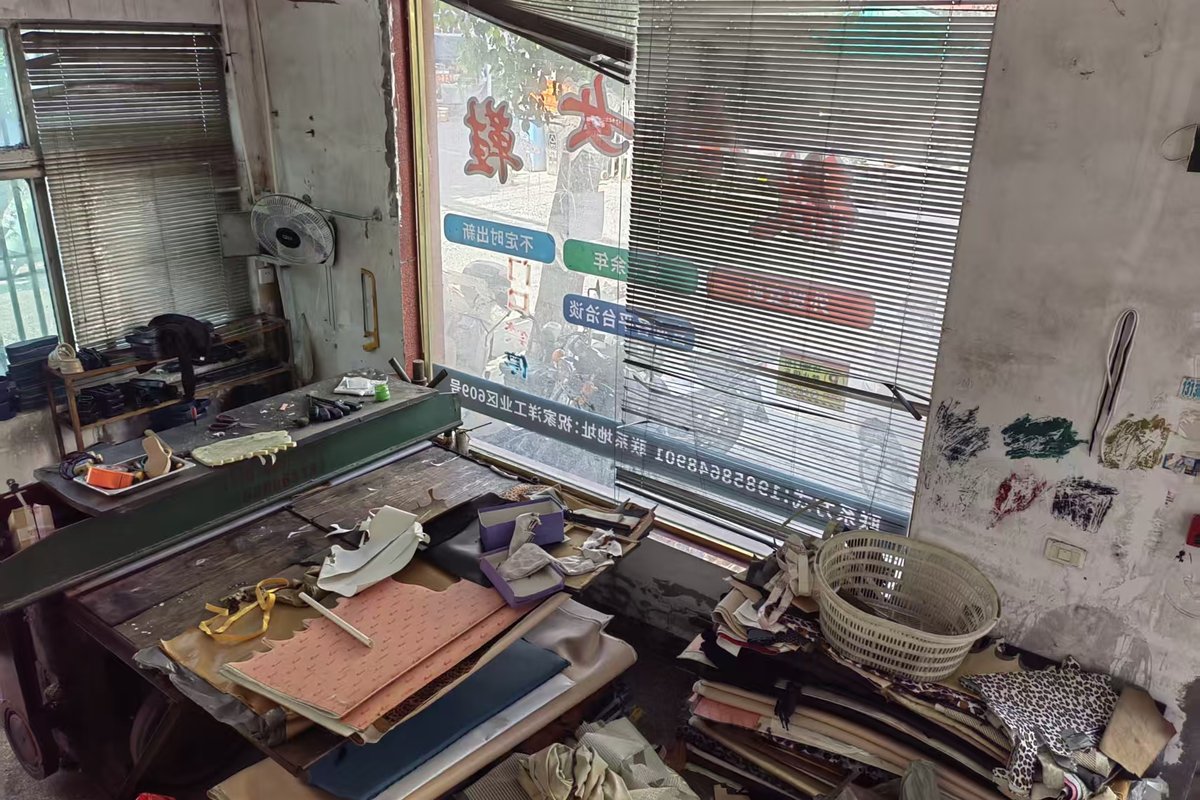
Bring your own inspector
Our own checks are not a substitute for yours. If you want independent verification, we make it easy.
Pre-shipment inspection
Appoint any inspection company you prefer — we schedule the visit, present the goods and the sealed sample, and hold the shipment until you have the report. Inspection fees are the buyer’s cost.
Laboratory testing
Physical and chemical testing can be arranged on request through an independent laboratory of your choosing, at the buyer’s cost. Common requests include sole bond strength, colour fastness, and restricted-substance screening for the EU market.
Factory audit and visits
You or your agent are welcome to audit the workshop. We will arrange the schedule and collect you from the airport or station.
Ask us for the inspection checklist we would use on your style.
Tell us what you are making and we will send back the specific check points and tolerances we would apply to it — before you commit to anything.
