




Why MOQ Matters — and How Small-Batch Orders Actually Work

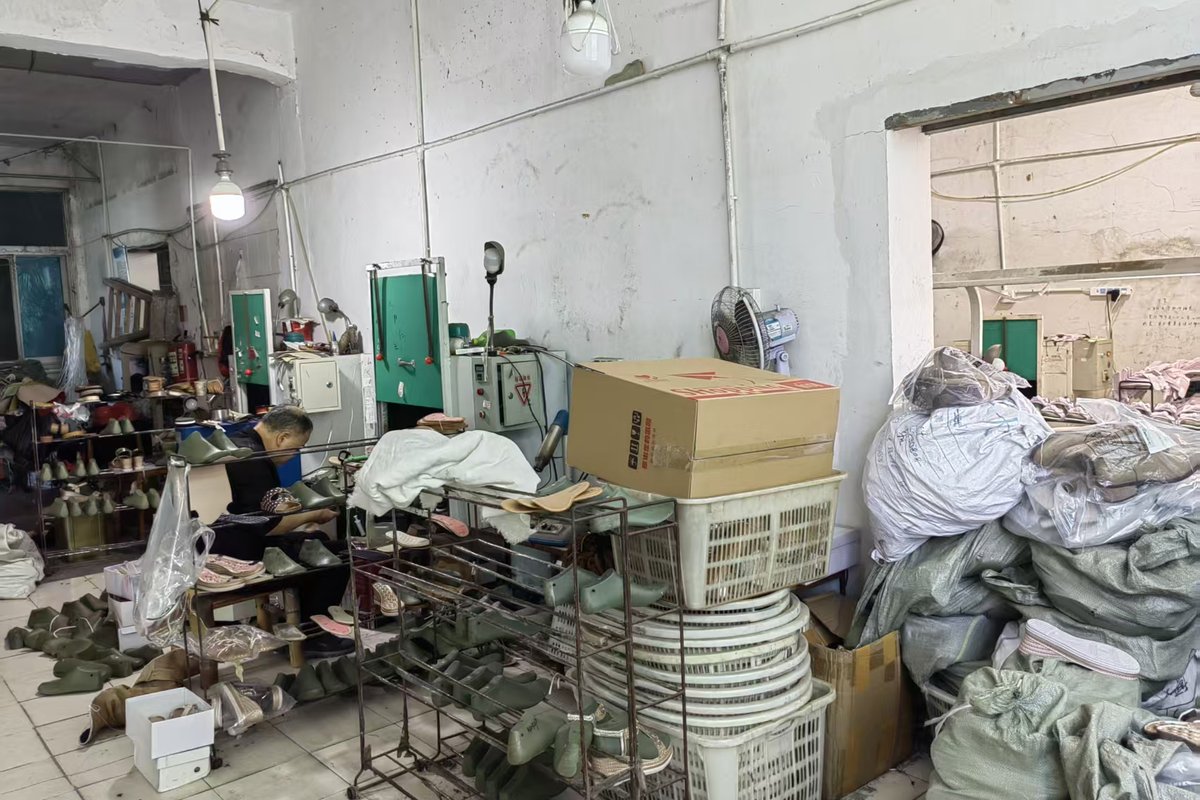
This article is for boutique owners and small brand founders who keep hearing the word MOQ and want to know what is actually behind it. After reading it you will understand what drives a footwear minimum, why 30 pairs per style and colour is workable while 5 pairs usually is not, and how to structure a first order that tests the market without leaving you holding dead stock.
MOQ is not a sales tactic
Buyers often assume a minimum order quantity is a negotiating position, something the factory invented to push volume. Sometimes that is true at large plants. In a handmade women’s footwear workshop it is mostly arithmetic.
A shoe is not one product. It is thirty or so components that each arrive with their own minimum, made on equipment that has to be set up for your style and then set up again for the next one. The MOQ is the point where those fixed costs stop swallowing the order.
What actually drives the minimum
Lasts
The last is the plastic form the shoe is built around, and it determines fit, toe shape and volume. A factory holds a library of lasts, and each shape exists in a full size run, so one last shape means a set of lasts, not one object.
If your design fits an existing last, the cost is already absorbed. If it needs a new shape, that is a real tooling expense and it has to be spread across the order. Thirty pairs carrying a new last is painful; thirty pairs on an existing last is routine.
Outsole moulds
Soles are moulded, and a mould is cut in metal per size. A new sole design therefore means a set of moulds. This is the single biggest reason a factory will say no to a small quantity of a genuinely new design, and the single easiest thing to work around by choosing from existing sole options.
Material minimums
Leather is bought by the hide and PU and textiles by the roll. Dyeing a colour to your specification has its own minimum, often far more than a small order needs. Rhinestones, buckles and logo plates come in bags and boxes with their own floor quantities.
This is why colour count matters more than most buyers expect. Ninety pairs in one colour and ninety pairs across six colours are very different orders even though the pair count is identical.
Line changeover
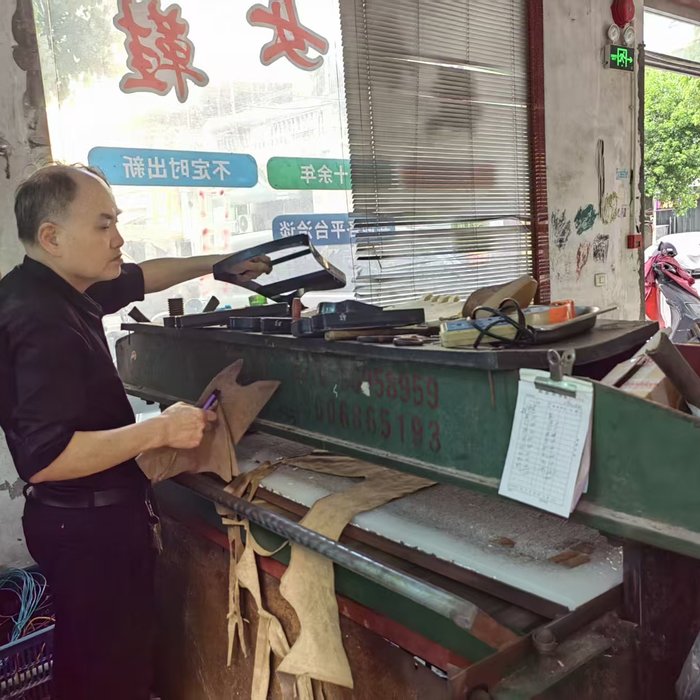
Switching a bench from one style to another costs real time: new patterns, new knives, new adhesives, new trims laid out, and a check sample built before anything runs. That changeover is the same whether the run is 30 pairs or 3,000.
Labour ramp-up
Handmade work has a learning curve. The first pairs of any new style are slow while the craftsmen find the rhythm of that particular upper. By pair twenty the pace has usually settled. A five-pair run is entirely learning curve and never reaches normal speed, which is exactly why very small quantities are inefficient rather than simply small.
Why 30 pairs works and 5 pairs does not
Our MOQ is 30 pairs per style and colour. That number is not arbitrary. Thirty pairs is roughly where a full size run can be covered, where the labour learning curve is paid off, and where the changeover cost per pair drops into a range that does not distort the price.
| Quantity | Relative price per pair | What changes | Best suited to |
|---|---|---|---|
| 5 pairs | Not offered as production | All setup, no run; effectively sample pricing | Sampling only |
| 30 pairs | Baseline (highest production price) | Setup spread thin; stock materials and stock soles only | Testing a style in one boutique |
| 100 pairs | Roughly 8-12% below baseline | Better material use, less waste per pair | A style that already sold through once |
| 300 pairs | Roughly 15-20% below baseline | Colour dyeing becomes viable; hardware buying improves | A proven seasonal core style |
| 1,000 pairs | Roughly 25-30% below baseline | Custom lasts and moulds become sensible to amortise | A signature style you own outright |
These are directional figures, not a price list; the actual gap depends on the materials and the hand-work involved. The shape of the curve is the point. The saving from 30 to 300 is significant, while the saving from 300 to 1,000 is smaller than most buyers assume and comes with far more inventory risk.
The cheapest pair you ever buy is the one that sells; the most expensive is the one still in the stockroom next season.
How boutique buyers test styles without dead stock
The whole point of a low minimum is to let you be wrong cheaply.
- Test three styles, not one. Ninety pairs spread across three designs teaches you more than ninety pairs of a single guess.
- Narrow the size run on the test. Cover your core sizes properly rather than thinly covering everything. Broken size runs kill sell-through.
- Keep the first colour safe. Test the shape in black, tan or natural. Test colour on the repeat, once you know the shape sells.
- Reuse one sole across several uppers. Same sole, three different uppers, is far cheaper than three separate developments and reads as a coherent collection.
- Stagger delivery. Order the test, and hold a slot for the repeat rather than committing all the volume up front.
- Photograph and record sell-through by style and size, so the repeat order is a decision rather than a feeling.
The minimum is per style and per colour because materials are bought per colour. Thirty pairs in one colour is one order line; ten pairs each in three colours is three lines below minimum, not one at minimum.
Structuring a first order
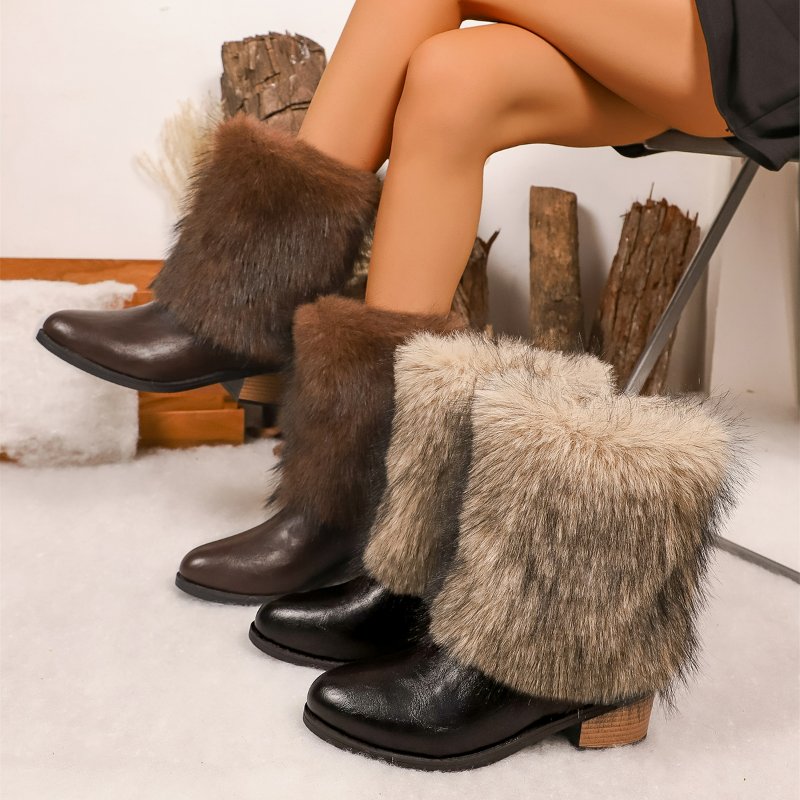
A good first order is built to produce information, not just stock.
A workable first-order shape
- Two or three styles, 30 to 50 pairs each, in one safe colour per style.
- Existing lasts and existing soles, so there is no tooling charge to absorb.
- Middle sizes weighted heaviest, with one or two pairs at each end of the range.
- Simple packaging on the test; save custom printed boxes for the repeat.
- One sample round approved in writing before the deposit, with the approved pair kept sealed.
Plan the calendar honestly. Sampling here takes 7 to 10 days, bulk production 15 to 30 days depending on quantity, and then shipping on top. A test order placed today is a shelf-ready product roughly two to three months from now, and that lead time is the real constraint on how many test cycles a season allows.
Structuring the repeat order
The repeat is where a small buyer starts making money, because everything expensive has already been paid for. The pattern exists, the last is proven, the craftsmen know the style and the fit questions are answered.
| Element | First order | Repeat order |
|---|---|---|
| Quantity | 30-50 pairs per style | 100-300 pairs on winners only |
| Colours | One safe colour | Add one or two, informed by sell-through |
| Sampling | Full round, 7-10 days | Usually none, or a colour swatch approval |
| Lead time | Sampling plus 15-30 days production | Production only |
| Packaging | Simple, low commitment | Branded boxes and hangtags now justified |
| Risk | Unknown demand | Known demand, known fit |
Two habits make repeats work well. First, place them earlier than feels necessary; the factory queue is the constraint, not the making. Second, do not change three things at once. Change the colour or the trim or the sole, and you can still tell what caused a difference in sell-through.
When a low MOQ is the wrong tool
Small batches are not always the right answer. If your design genuinely needs a new last and a new sole mould, spreading that tooling across 30 pairs makes an expensive shoe. In that case there are two sensible routes: adapt the design onto existing tooling for the test, or accept a higher first order and commit properly to the style.
Equally, if a style has sold out twice, continuing to reorder 30 pairs at a time is costing you margin and shelf presence. The minimum exists to let you start, not to define how you scale.
With 1,000-plus original designs already developed here and 30-plus craftsmen who work on handmade sandals, slippers and flats every day, most small-batch requests can be built on tooling that already exists. That is usually the difference between a viable 30-pair test and an unaffordable one.
Want to test three styles at 30 pairs each before committing to a season?
Send us your reference photos or target price and we will tell you which designs can run on existing lasts and soles so your first small order stays affordable.
