




Choosing Materials for Women’s Sandals: PU, Leather, Raffia and Rhinestone

This guide is for buyers and brand founders choosing materials for a women’s sandal programme. It compares PU, genuine leather, raffia and rhinestone trims on look, durability, cost and care, covers the main outsole options, and shows how each choice moves your landed cost and the retail price you can realistically hold.
Material is the price
On a handmade sandal, upper material and trim typically account for a third to a half of the factory price. Labour and soles matter, but material is the lever that moves cost most. It is also the thing a customer touches first.
A well-made shoe in the wrong material for its price point will sit unsold; a simpler shoe in the right material sells through.
Uppers compared
PU
Polyurethane synthetic is the workhorse of mid-range sandals. Quality varies enormously, which is the most important thing to know about it. Good PU has a convincing grain, a soft hand and a backing that does not crack when folded; cheap PU looks flat, feels plasticky and separates from its backing after a season.
PU is consistent roll to roll, comes in almost any colour and finish, is easy to clean, and cuts with very little waste. It does not breathe as well as leather, though on an open sandal that penalty matters far less than it would in a closed shoe.
Genuine leather
Cow leather gives structure and durability; sheep leather gives softness and drape. Both mould to the foot with wear, which is the single biggest comfort advantage over synthetics, and both age visibly rather than degrading.
The trade-offs are cost, variation and waste. Hides carry natural marks and shading differences, so cutting is slower and yield is lower. A leather sandal is also more sensitive to water than buyers expect, and will mark if it is soaked and dried quickly.

Raffia and natural weaves
Raffia, straw and woven natural fibres carry an immediate seasonal signal. They photograph beautifully, they read as artisanal, and they are strongly associated with resort and summer buying.
They are also hand-worked, which is where the cost goes. Weaving and hand-finishing add labour rather than material cost, and the finished texture varies slightly pair to pair.
Practically, raffia is the least weather-tolerant of the common uppers. It frays if it is scuffed hard, and it does not recover from soaking. It is a beautiful six-month material, not a three-year one.
Rhinestone and decorative trims
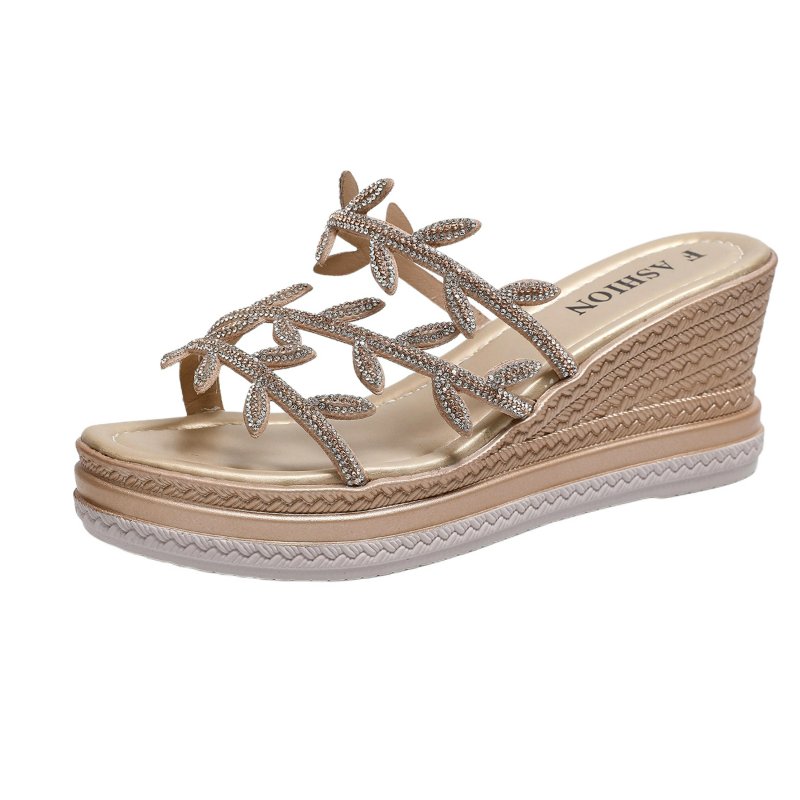
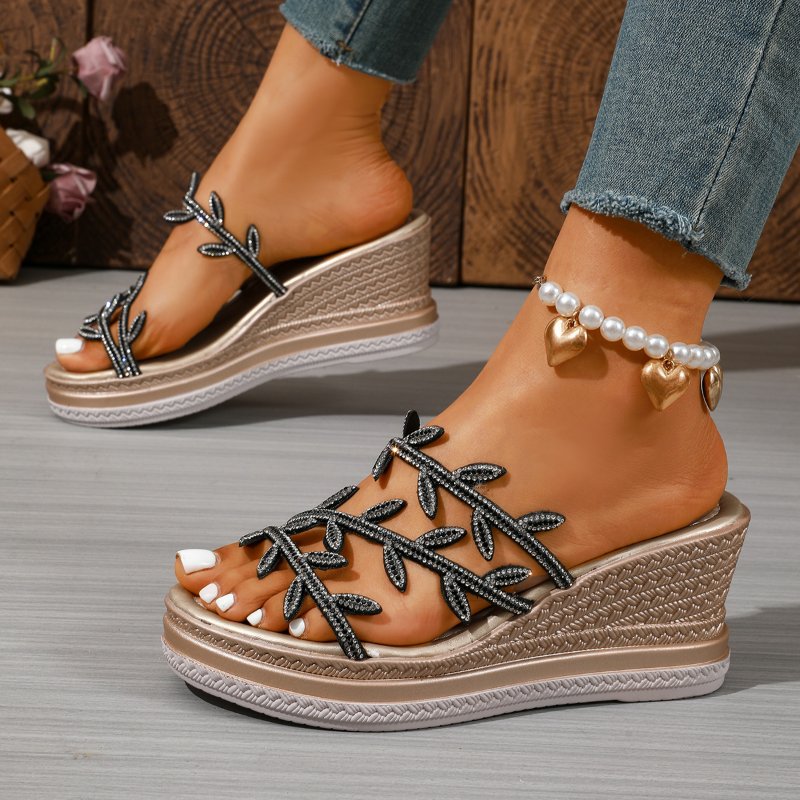
Rhinestones are a trim rather than an upper, but they behave like a material in the costing because they add both component cost and significant hand labour. Stones are set individually or in pre-made bands, and the difference between the two in price and in appearance is large.
The quality questions are the setting method, the adhesive, and the stone itself. Glass stones hold their brilliance; cheap acrylic dulls and yellows. A loose or missing stone leaves an empty setting that makes the whole shoe look damaged, so security matters more than sparkle.
| Material | Look | Durability | Relative cost | Care | Best use |
|---|---|---|---|---|---|
| PU (good grade) | Clean, consistent, any colour | 1-2 seasons | Low | Wipe clean | Mid-range fashion sandals |
| PU (low grade) | Flat, plasticky sheen | Often under one season | Lowest | Wipe clean | Avoid at mid-range positioning |
| Cow leather | Structured, ages well | Several seasons | High | Condition; keep dry | Premium neutrals, comfort styles |
| Sheep leather | Soft, fluid drape | 2-3 seasons | High | Gentle; marks easily | Soft straps, unlined uppers |
| Raffia / straw weave | Textured, artisanal | One season of hard wear | Medium-high (labour) | Brush; never soak | Resort and summer capsules |
| Woven textile | Casual, colourful | 1-2 seasons | Low-medium | Spot clean | Everyday flats and slides |
| Rhinestone trim | High sparkle, occasion | Depends on setting | Medium-high (labour) | Avoid water; store boxed | Evening and holiday styles |
The material that fails first decides how long the shoe lasts, no matter how good everything else is.
Outsoles: TPR, EVA and rubber
The sole is where comfort, weight and perceived quality meet. It also affects freight, because a heavy sole raises carton weight and a bulky wedge raises carton volume.
TPR
Thermoplastic rubber is the default for mid-range sandals. It holds fine detail, takes colour well, has reasonable grip and wears acceptably. It is heavier than EVA and less durable than true rubber, but it sits at a sensible middle point and comes in a wide range of existing moulds.
EVA
EVA is light and cushioned, which is why it dominates comfort slides and pool styles. It is the cheapest of the three and the most forgiving underfoot. The trade-offs are that it compresses over time, leaving a permanent footprint, and it can scuff and discolour.
Rubber
Real rubber gives the best grip and the longest wear, and it looks more substantial. It costs more, weighs more, and its extra weight shows up in your freight invoice. Use it where durability is part of the story or where a walking sandal needs genuine traction.
Wedge and cork platforms
Wedges are a construction as much as a material. A cork or cork-look wedge reads as natural and summery and pairs naturally with raffia uppers. A wrapped wedge, covered in the upper material, looks more finished and costs more in labour.
Wedges add height and volume, which means fewer pairs per carton and higher freight per pair. On a small order that can be a bigger cost difference than the sole material itself.
| Outsole | Weight | Grip | Wear life | Relative cost | Suits |
|---|---|---|---|---|---|
| TPR | Medium | Good | Medium | Medium | General mid-range sandals |
| EVA | Light | Moderate | Compresses over time | Low | Comfort slides, slippers |
| Rubber | Heavy | Best | Longest | High | Walking sandals, premium |
| Cork / cork-look wedge | Medium | Depends on tread | Medium | Medium-high | Summer wedges, resort |
| Wrapped wedge | Medium-heavy | Depends on tread | Medium | High (labour) | Dressier elevated styles |
How material moves landed cost and retail
Take one strap sandal shape and change only the material. The factory price moves, then freight and duty amplify it, and finally your retail multiple amplifies it again. A one-dollar decision at the material table becomes a three-to-five-dollar decision on the shelf.
- Upper material is the largest single swing. Moving from good PU to cow leather commonly adds 40 to 70 percent to the upper cost line.
- Hand labour follows. Weaving, hand-set stones and wrapped wedges add hours, not components, and hours are the hardest cost to compress.
- Colour count raises cost on small orders because materials carry per-colour minimums.
- Lining choice is quiet but real. Leather lining adds cost and adds a comfort claim you can actually make.
- Sole weight and wedge height change pairs per carton, and footwear freight is usually charged on volume.
- Packaging should match the material story. A leather sandal in a thin polybag undercuts its own price.
Customers forgive a synthetic upper at a mid-range price. They do not forgive it at a premium price. If you intend to hold a higher retail, put the money into the upper and the lining, where hands and eyes go first, before spending it on trims.
Matching material to season and market
Material carries a season signal whether you intend it or not. Raffia and cork say summer; leather in a neutral tone works across the year; rhinestones peak in the run-up to the holiday season. Plan the buy around that signal rather than against it.
| Season / market | Uppers that work | Sole | Note |
|---|---|---|---|
| Spring and summer, general | PU, textile, light leather | TPR or EVA | Volume window; keep colours broad but safe |
| Resort and coastal | Raffia, straw, natural weave | Cork or cork-look wedge | Short selling window; buy tight |
| Premium boutique | Cow and sheep leather | Rubber or leather-look TPR | Leather lining is worth the cost here |
| Occasion and holiday | Satin-look PU with rhinestone trim | TPR | Check stone security carefully |
| Hot and humid climates | Leather or breathable textile | Rubber for grip | Avoid dense synthetic linings |
| Home and indoor slippers | Soft textile, sheep leather | EVA or soft TPR | Comfort and weight matter more than wear life |
One last practical point: request material swatches before you approve a sample, and keep them with your approved pair. Material names mean little on their own, and PU alone covers a range from excellent to unusable. A swatch you have held and folded is a specification. A word in an email is not.
Not sure whether your sandal should be PU, leather or raffia?
Send us your design or reference photos with your target price and we will come back with material options and swatches that hold that price without giving up the look.
